
5 Factors Affecting Horse Farm Prices in Ontario

5 Factors Affecting Horse Farm Prices in Ontario

If you’ve been watching the equestrian real estate market in Ontario, you might have seen that prices are on the rise and have been for some time.

We’ve been watching the price trends closely over the years.

As of writing this article, in October 2020, here are some average prices to take note of:

**** These prices are for properties in the greater golden horseshoe only. ***

Hobby Farms

Where the property has a home and a small barn. Possibly some paddocks. The average list price is currently around $1,864,000. In fact, most sales for this type of property happen around the $1,200,000 to $1,500,000 mark.

Equestrian Facilities

Where the property has a home, barn, indoor arena, and possible outdoor arena. That is, infrastructure to warrant the name “facility”. You are currently looking at an average list price of about $3,700,000. However, we see that the majority of sales for equestrian facilities happened somewhere between $1,900,000 to $2,500,000 this year.

Now, we know averages can be skewed depending on the number and types of listings available. And, also by a result of very high and very low outlier properties. For instance, there is currently two very high-end equestrian facilities listed at $18,000,000 and $19,000,000 that will be playing a factor in price here.

Also, properties with a barn, existing fencing and/or arenas often come at a premium when compared to properties without these items.

Now, the added value of infrastructure isn’t the only reason impacting horse farm prices in Ontario. Similar to other types of real estate, other forces seem to be playing a role in prices across the Province.


1. Real Estate is Increasing Across the Board
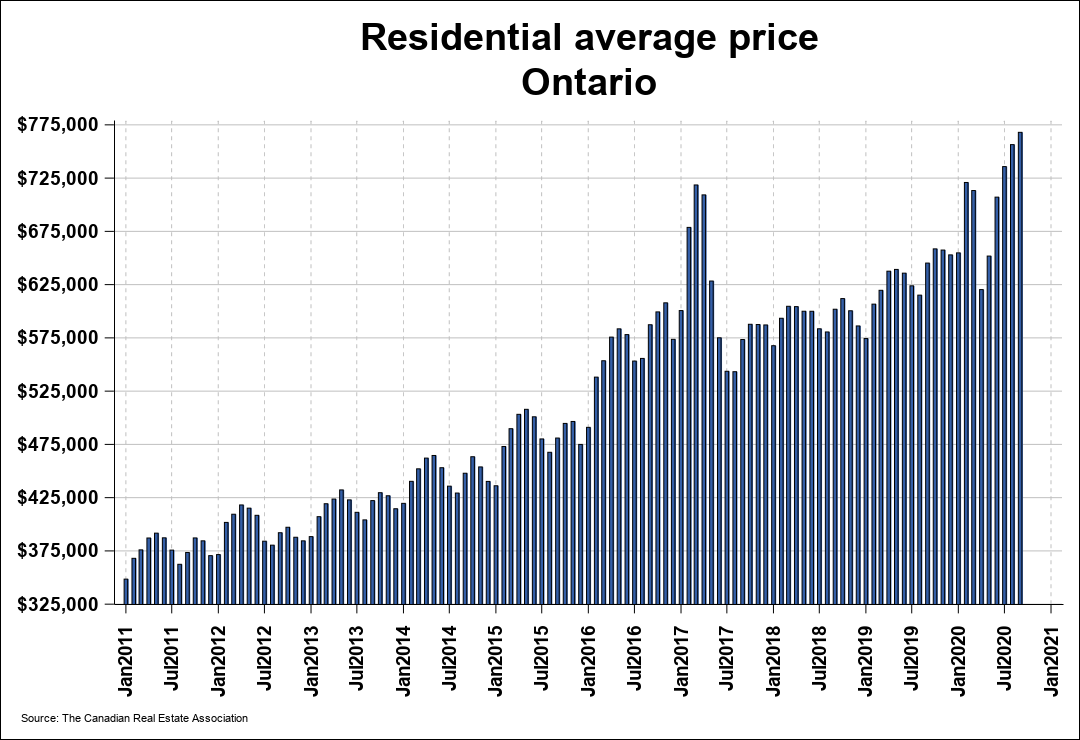
CREA Stats for September

CREA Statistics: ALL Residential Sales in Ontario

Well, at least residential real estate is.


In fact, according to CREA, we are looking at a 14.9% average price increase in the first 9 months of this year when compared to the first 9 months of 2019. It should be expected then, that larger properties – hobby farms and equestrian facilities – would increase in price as well.

Farmland values are also on the rise and have been since about 1987. According to Farm Credit Canada, the average value of Canadian Farmland increased by 5.2% in 2019. With Ontario seeing an increase of 6.7% in 2019 as well. To put a number value on this, in 2019, it was reported that in Southwestern Ontario, farmland prices were at a total average of $14,458 PER ACRE.

And as has often been the case, farmland values are often good indicators of price trends in general.


2. The Cost to Borrow Money – Interest Rates


Naturally, interest rates have an impact on the value of investments, real estate included. 

In an attempt for the government to keep money flowing through the economy during the pandemic we’ve just experienced, we saw the lowering of interest rates. This is part of why we are seeing such high levels of buyer activity in residential markets and more competition than in the previous couple of years.

This goes for farmland as well… according to a study by Bonnefield, along with a number of other factors, historically “Low interest rates reduce the cost of capital to acquire farmland; therefore, periods of low interest rates correlate with higher farmland values.” Or at least this is what we have witnessed historically.

Similarly, with low interest rates, the cost to borrow money to buy a horse property becomes attractive to more people.

Lower interest rates might mean people are more willing to take the risk to purchase a horse property now, possibly more so than we have seen before. Especially properties that would accommodate a private facility. With barn shutdowns and the uncertainty of whether we will see another shutdown, horse people are looking at this as a viable alternative to paying board.

We would say that, with things being as they currently are, and should interest rates remain low, we are likely to see continued demand for horse and hobby farms. And a drive upwards in values to continue. Perhaps not at such a substantial rate as we’ve seen this year, but likely at more typical rates.

There has also been a serious lack of good properties to choose from for some time. This has resulted in pent-up demand from the buyer’s market and leads us to our next point.


3. There Isn’t Much Good Inventory to Choose From
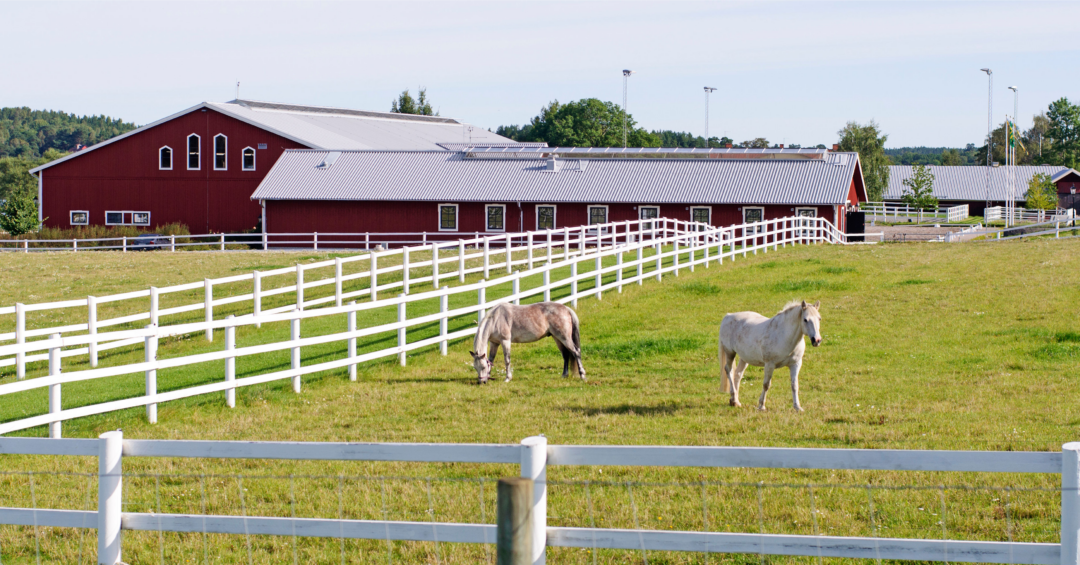
 

Horse Farm Ontario


In many facets of the residential real estate market, finding a good home at a good price has become difficult. When one does come up, it seems it is either snapped up by a buyer within a few days or you find yourself competing for the property.

In terms of properties that can accommodate horses, relatively speaking, there aren’t many of these types of equestrian properties available for purchase in the first place.

It is simple economics that higher demand and limited supply equal an increase in value.

As of writing this post, there are about 180 equestrian type properties (i.e. equestrian facilities and hobby farms) in the Greater Golden Horseshoe area. Now, I say about because some listing agents do not accurately categorise these properties as being hobby or horse farms. But that is a rant for another time. 

And of course, this number can fluctuate daily and monthly with sales and listings coming on to the market.

But, this is not a lot to choose from, from an already “unique” subset of residential real estate. And what narrows it down even further are the high priced properties (over $2 million) and the ones that need a complete renovation on the lower end. You (and many others) are then left with just a few good options to choose from.

Although these may be considered a niche property, i.e. not everyone has a horse or wants a property with a barn on it, they are still in high enough demand.

There are more people looking to move to the countryside nowadays and a barn can provide as useful storage. Alternatively, a barn can also be used to keep other animals like chickens, lamas, and such. So you are now competing with people who want a little hobby farm, or country home, as well… and believe me we are seeing more and more every year.


4. The Added Value of Infrastructure 
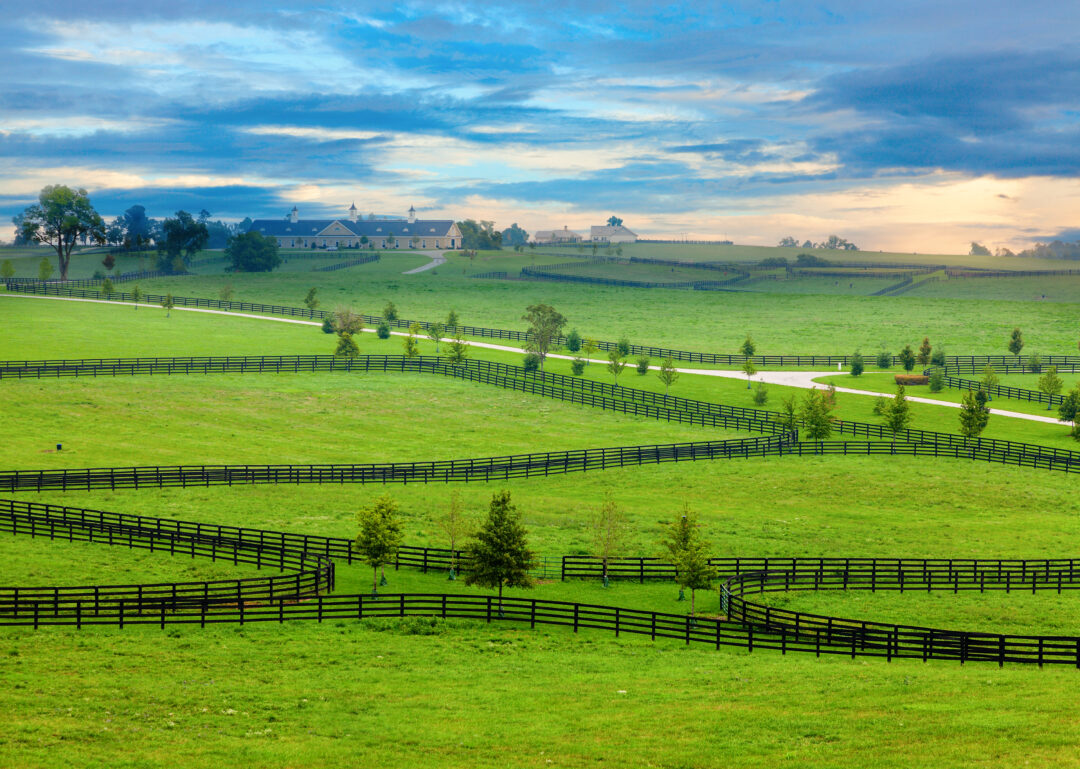
 

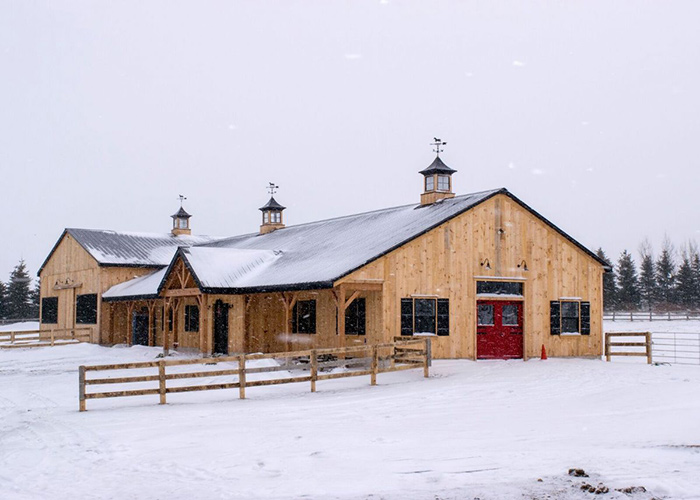
Image showing barn infrastructure


If someone has purchased a property with a home on it, added a barn and perhaps some fencing for paddocks – others looking for this are going to pay a premium before they settle on a property without the existing infrastructure. What I am saying is, if someone wants this type of property and can afford to, they will pay for the value already added.

As for equestrian facilities, if you read our article on the costs of building an equestrian facility you will know the cost to build an equestrian facility is extraordinarily expensive. So these types of niche properties are going to go for a premium as well.

Now, it is also worth noting that these properties do take a longer time to sell and it is likely because of the higher price point on average. They may not be as “liquid” as a single-family home in the city, for example. However, the more that people want out of that fast-paced lifestyle, and the more people who can work from anywhere, the more hobby farms, country homes and small facilities will be harder to acquire.


5. Location is a Big Driving Factor in Price
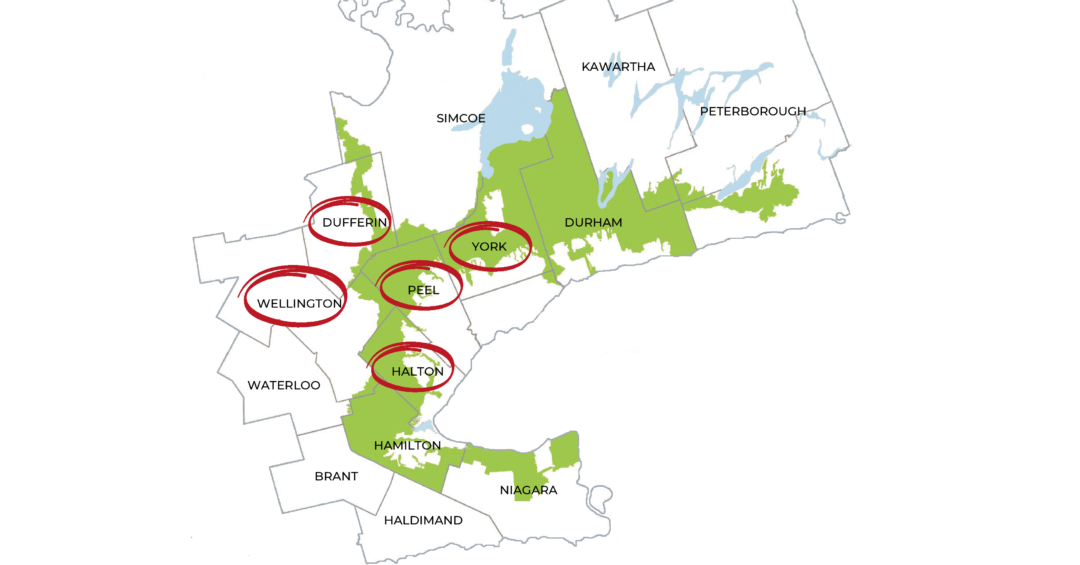
 

Map showing popular horse areas in ontario


For the most part, horse properties in high demand also seem to be in locations where real estate prices are at their highest.

For example, York, Peel (Caledon specifically), Halton and parts of Wellington and Dufferin Counties are considered prime equestrian locations. They are close to all horse necessities – show venues, vets, race tracks and so on. These areas also have a close proximity to Toronto. As such, these locations are going to see higher prices.

Hamilton (specifically Flamborough) is another area not far behind in terms of popularity, proximity, and rising prices for horse and hobby farms.

Importantly though, as these more expensive areas make it tough to find an affordable horse facility, people look to other areas for opportunities. We see people pushing out to more rural parts of Simcoe, Wellington and Dufferin Counties as well as regions like Niagara and as already mentioned, Hamilton. We have seen a lot of value increases in these areas as a result of increased demand.


______


You might be reading this article and thinking to yourself that now isn’t the time to buy a horse property or hobby farm. And you could be right.

Prices are quite inflated and at the recorded 14.9% average increase in residential property prices over the first 9 months of 2020, this is not a sustainable rate of appreciation.

But here is something to think about … when we saw a similar market in 2016 and 2017, many said they were going to wait to buy a property until the market “falls”. Well, many are still waiting and have missed out on some serious appreciation gains. Also, with interest rates being where they are, it might be a good idea to take advantage of them as they are now.

It is also worth noting that, never have we seen such a push and opportunity for people to leave the suburbs and the cities to move to the countryside. As people look for affordable living options outside of the major cities and for peace and space in a rural setting, we will see more and more of this each day.

Unless something extremely drastic happens, we are still likely, at worst, to see a return to more normal appreciation rates of about 3-5% per year. This will not mean a drop in real estate prices but rather a less drastic increase in average prices from where they currently are to, rather, a more sustainable rate of appreciation.

But, without a crystal ball it is difficult to say where things will go with certainty. Many thought a pandemic would cause a sizable slowdown to the market, and it did for a few weeks. But even now, still in a pandemic, the market is performing, arguably better than it ever has.

Canada will continue to be a place investors look at to purchase property and a place people look to as a place to call home. And country homes, hobby farms and equestrian properties are not an exception to this.
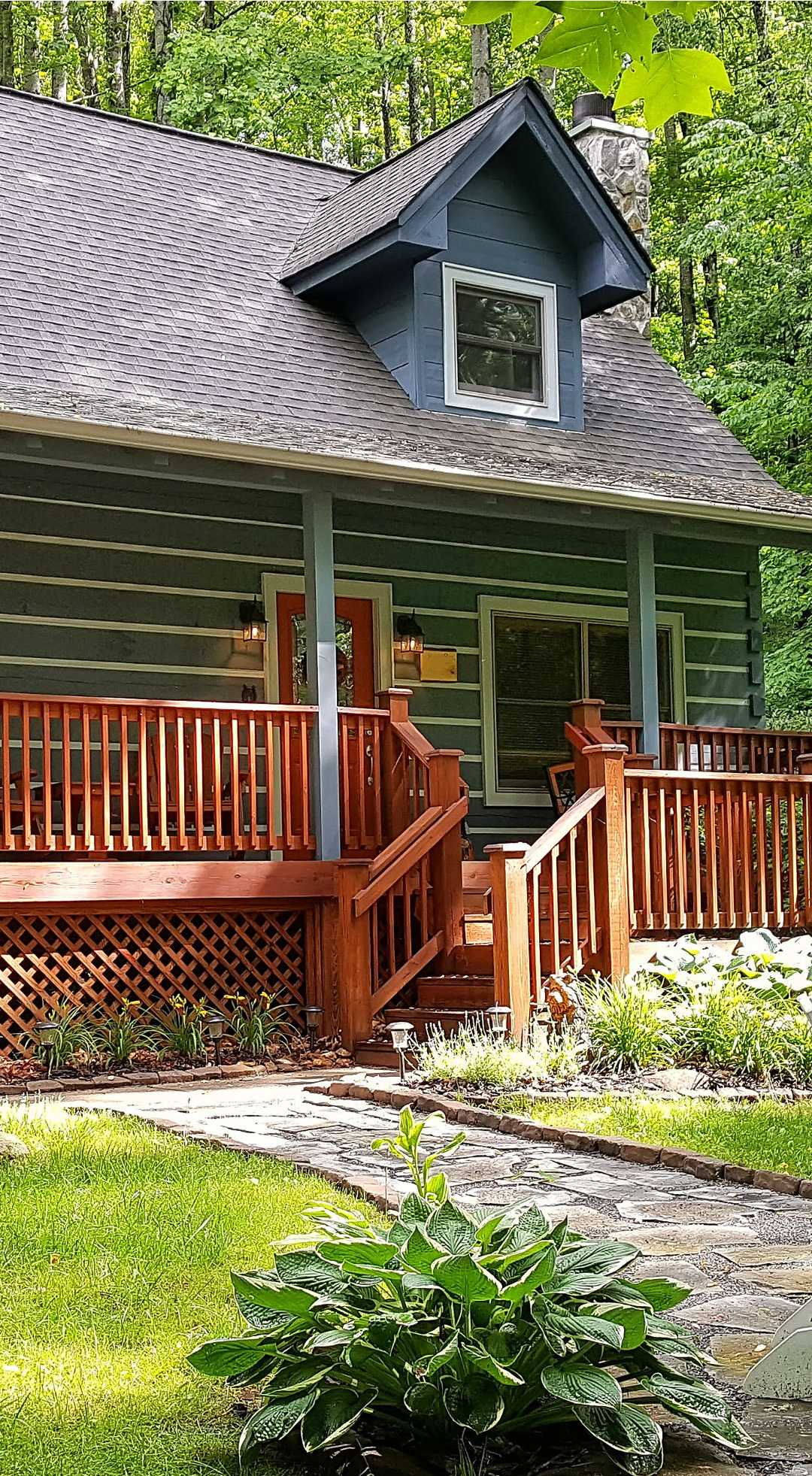
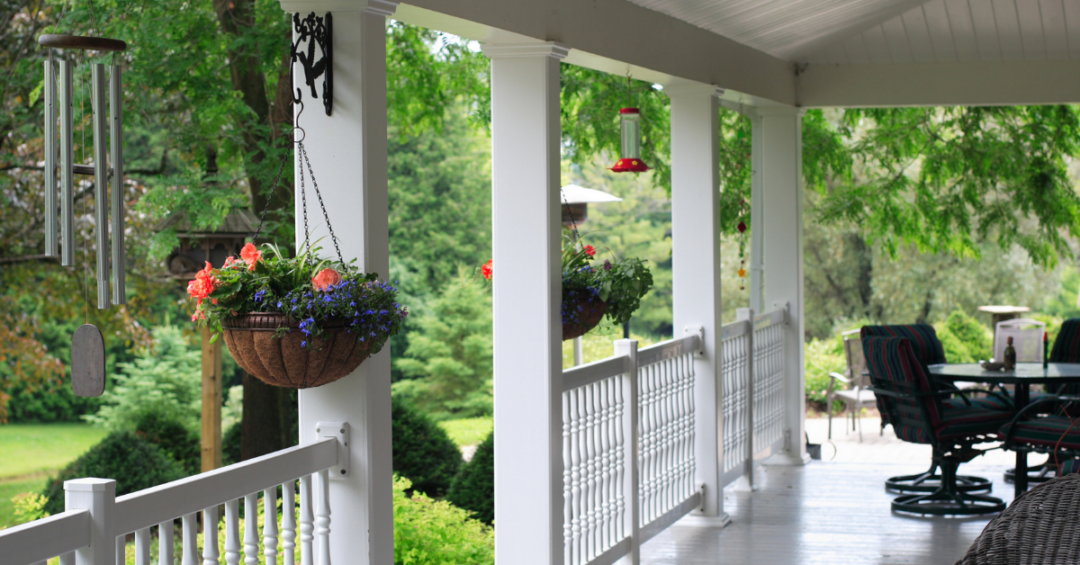
 

The Right Way to Downsize to a Country Home

The Right Way to Downsize to a Country Home

At any point in one’s life, it can become a bit of a burden to clean, maintain, and live in a big home.

Couples, small families, retirees, and even sometimes larger families all have their reasons for wanting a smaller home. It can be a way to save on finances, avoid a ton of housework or simply a way to change up your current lifestyle.

Now, downsizing your home doesn’t necessarily mean you have to downsize your property size.

We see more and more people wanting a cozy home but like the idea of having more space and being in a more peaceful, safe setting. They see the extra acreage as an opportunity for their families to enjoy and for them to pursue hobbies or even have a few more pets

Here are our top tips for the right way you can downsize to a country home!

1. Choosing The Right Acreage

choosing the right acreage

Naturally, the size of your country property is going to be relevant here.

Be realistic about what you need.

A 1- to 5-acre property is PLENTY of space for the kids to run around, for you to grow a vegetable garden, have some of your own chickens or set up a workshop. Remember, the point is to reduce the amount of work you have to do, and getting into a 10-acre country property could be the opposite of that!

However, there are a couple of caveats to this…

One being, for example, if you find a larger property, let’s say 10 acres. Where 7 of these acres are rented out to a farmer, you won’t have a large section of land to worry about maintaining… so long as the farmer continues to rent that piece of land from you.

Secondly, and importantly, the type of acreage you are buying also makes a huge difference. If the property is primarily forested and you plan on keeping it that way, there’s not much maintenance required. Now, if you are getting into a 5-acre property that is all lawn you are going to be cursing yourself for spending a good chunk of your Saturday mowing grass. The fun of a riding mower wears off towards the end of the summer for most people.

There is no shame in finding a half-acre property on the outskirts of town either. You can still get the country life feeling without being on a massive property.

The point is, you have options.

The best thing to do is explore a range of property sizes during your search and really get a feel for what you want, need, and what you can realistically manage.

2. Avoid Constant Maintenance

naturalized yard

At the risk of stating the obvious, county properties often require more maintenance than a home in town. From yard maintenance and snow removal to any fence repairing and outbuilding up-keep required, living in the country can take work!

If you are looking to downsize to a rural property, there are a few things you can do to help cut down on this maintenance.

For example, on larger properties, it might make sense to naturalize a good part of the land. Plant some native plants and let them GROW. You can keep a small section around your home for gardening and lawn cutting but naturalizing a good chunk of your property will drastically cut down on the amount of yard work you’ll need to do. Learn more about naturalizing your yard here.

We have a friend who owns a 2-acre property with a little four-stall barn where he keeps two mini ponies. They graze around his property and aside from some front yard work, he does not have to worry about cutting the grass too often.

Another thing you could do is, try to find a property will a reasonably short driveway. This should help lessen the time spent removing snow in the winter

When looking at homes make sure you understand the upkeep of the different utility systems that come with living in the countryside. For example, you may prefer to find a home with a well vs. a cistern because with the well you don’t have to pay for water or have it hauled in by a water haulage company.

Try to analyze properties early on from this perspective. Really think about what it is going to take to maintain not only the house but the land and any other structures as well. These are all things you can discuss with your real estate agent during your search.

3. Choose Your Location Wisely

It is possible to find country type properties on the outskirts of town.

A super example is Pelham/Fonthill in Niagara. This is an area home to people who enjoy the small-town feel but who enjoy the amenities of a chic little downtown area, and all day-to-day necessities like grocery stores, pharmacies, schools, and so on.

If you prefer to be close to an active nightlife or need easy access to shopping and schools we do recommend looking at a small property close to town.

Although going rural can sound wonderful, you want to keep in mind why you are downsizing in the first place.


4. Consider The Costs

Downsizing to the countryside might not mean a cheaper lifestyle.

To begin with, you may be buying a home that sits on more land, and so this could mean a slightly more expensive purchase when compared to a small home or condo in town.

However, if you are living in a larger home in the city and have built up a good chunk of equity in your existing residence, downsizing to a country home will likely be easy enough to accomplish when it comes to financing.

Monthly expenses should also be looked at too! Make sure to check up on what your property tax costs are going to be and if possible, ask current owners for an estimate of their monthly utility bills. As we have discussed in a number of other posts, utilities can vary from country home to country home and be quite different than those in the city.

On this note, it would be worth making sure the home is also as efficient in this department as possible. For instance, it would be a good idea to check that the windows are newer and not single pane. That the furnace is not extremely old and so on.


5. Choosing The Right Home

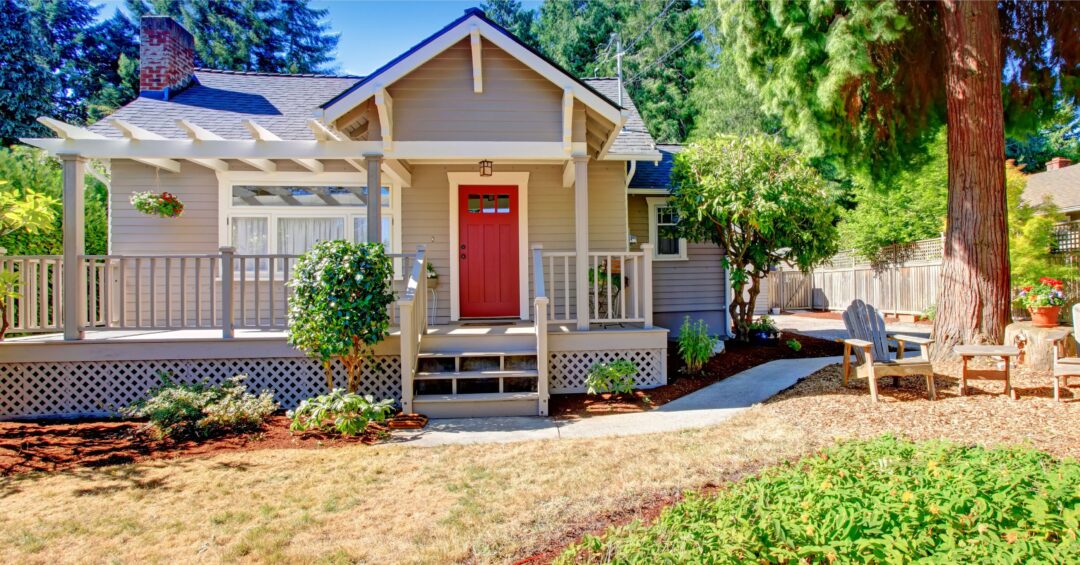
Little country home

As is the nature of downsizing, the home size is going to be very important.

Square footage should be paid attention to more so than bedroom and bathroom size. You can find 2 bedroom homes with 2500 square feet which might be a little more space than needed.

Don’t forget about the basement either. If you’re a young family that thinks they might need a little more space down the road a house with an unfinished basement might be the way to go to begin with. It provides an option to create space in the future if needed.

If your goal is to reduce the amount of work, don’t get into something that needs a lot of fixing up or updating.

Over the years we have helped people sell their existing home in order to downsize to a smaller home in the countryside. It isn’t always an easy decision to make, especially if your family has been in your existing home for some time. Memories have been made and experiences shared.

If you have made the decision to downsize we recommend:

  1. Figuring out your wants and needs early. View properties you think might be a good fit early so you get an idea of what to expect when the time comes to buy.
  2. Try to remain realistic and decipher between what you need vs. what you want.
  3. Be patient. It can be hard enough leaving a family home. You want to make sure the home you are downsizing to is something you are happy and content with.
8 Things Not to Overlook When Viewing Horse Farms

8 Things Not to Overlook When Viewing Horse Farms

It’s the small things that can make the biggest difference.

This is couldn’t be more true when it comes to finding the right equestrian property.

When you see a property that seems perfect, it is easy to overlook things at first glance. In this article, we briefly go over 8 items that cab be easy to overlook when viewing horse farms. 

1. Water Lines to Paddocks

Having water lines running to paddocks can make a world of difference to your time and your horse’s comfortability.

It is not a necessity but it a convenience, that’s for sure!  Rather than having to cart buckets of water back and forth from the barn, or dragging a hose around to fill troughs, having faucets located in paddocks is a great feature of any equestrian property.

We wouldn’t dissuade a purchase just because there are no water lines to paddocks. These can always be put in later if needed. But it is good to train your eye to look out for this “feature” during your property search. 

2. Drainage

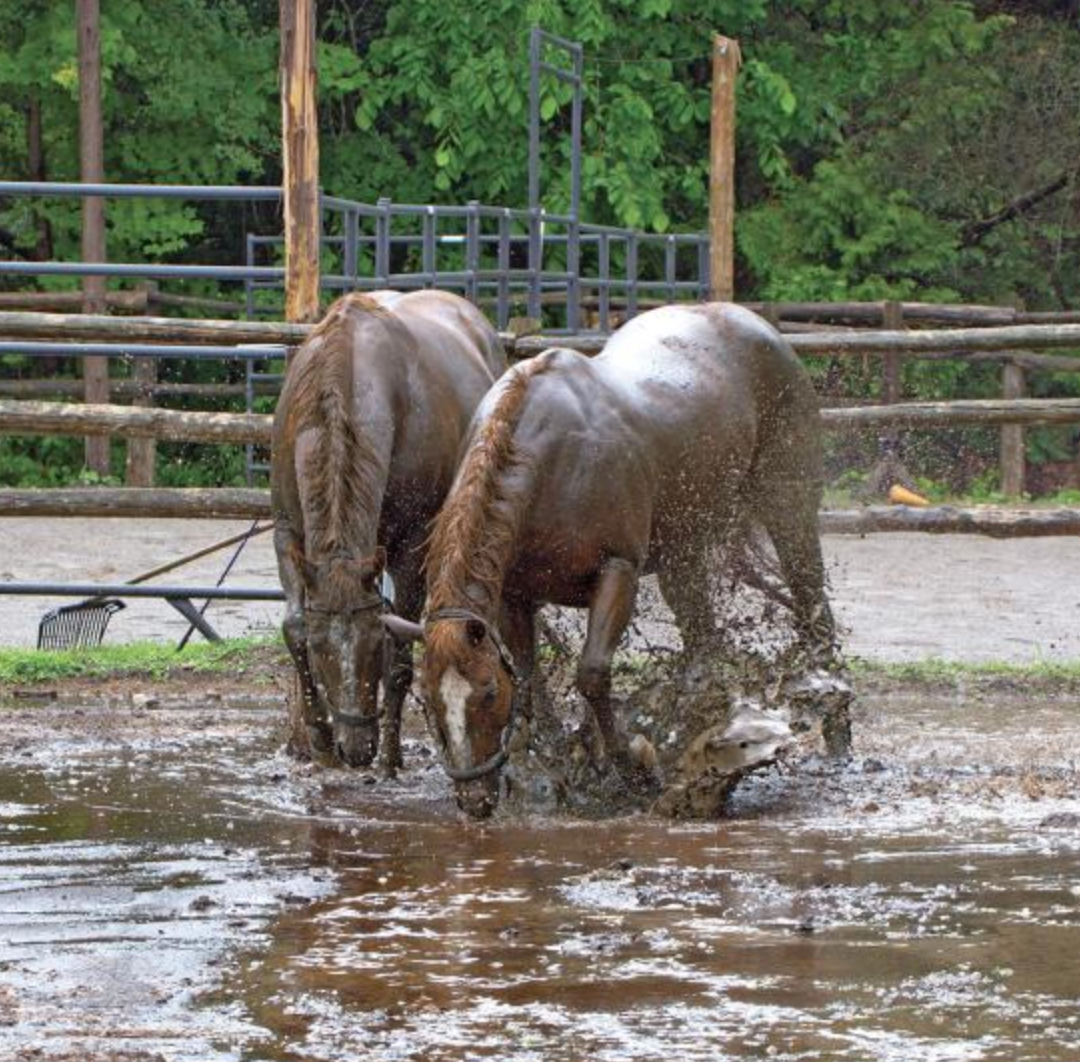
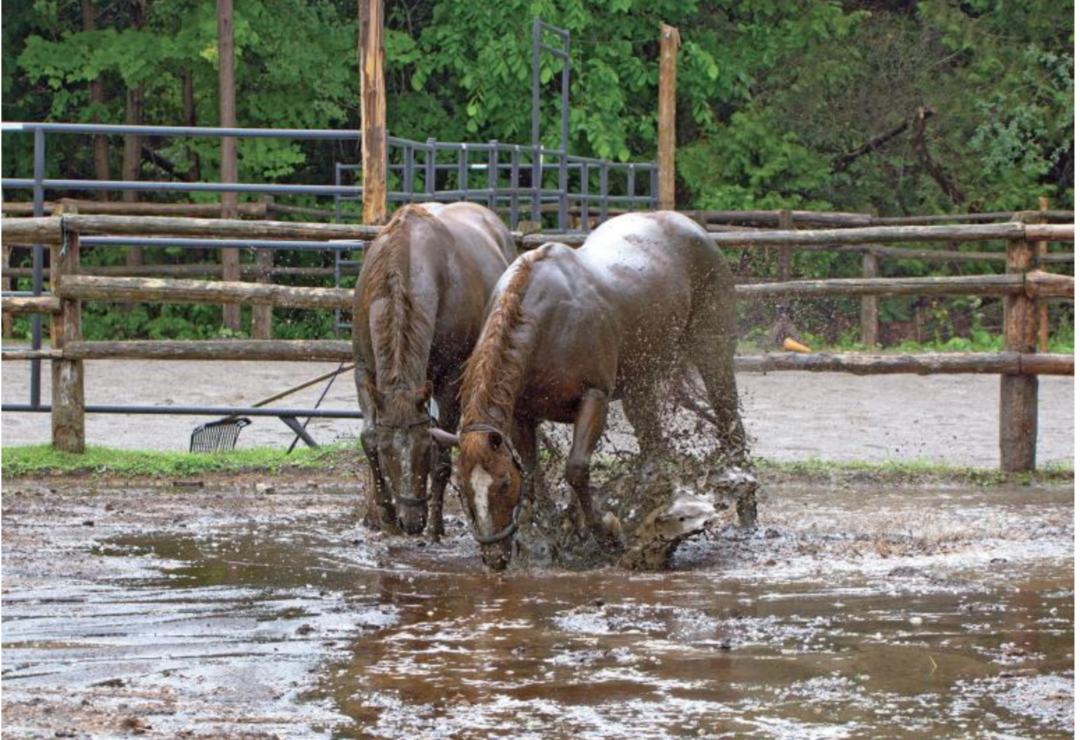
Drainage Around the Property

You don’t want your horses standing in muddy paddocks during the wetter months. Ok, yes, the two pictures above look like they are having the time of their lives! But having to deal with this much water during the winter freezing and thawing will be difficult, as will growing any grass here. Not to mention a bit of a headache for whoever has to hose these two off.  🙂

You also don’t want water pooling around the property, against the barn and arenas. This is why it is essential to investigate and ask questions about the property drainage. Some things you can look for when viewing the property are:

  • Checking out the slope of the property. Ask yourself if there is a slope towards the barn or other property structures? If so, is there a drainage system (e.g. a drain line or berm) to intercept the water?
  • Looking at the state and positioning of the eavestroughs around the barn and indoor arena is also a good idea. If these aren’t in good repair or aren’t directed away from the structures correctly, you run the risk of having water coming into the barn, your stalls or even worse, causing a flood.
  • Inside the barn, you can look for evidence of water seeping in by looking at the back of stalls. Check for stains on the flooring or back panels of the stalls. You can also look at rooms that have a wall that abut the exterior for signs of effervescence. This likely won’t be an issue in newer barns but keep your eyes open when viewing older barns.
Outdoor Arena Drainage

It is going to be tough to see what the drainage of the outdoor arena is like without seeing it after a rain. This is why it is easy to overlook on first viewing. If the arena is fairly new, you may be able to contact the installer to get an idea of what type of drainage system they put in. Or simply have your realtor do some investigating for you.

If possible, and during the right time of the year, it helps to go back to a property on or after a rainy day. This way you can get an idea of how the property, barns, and arenas handle the rain or snowmelt.

3. Ventilation

Ventilation is EXTREMELY important. It is vital for your horses’s health. Dusty shavings and waste from the horses mean fresh air flowing through the barn is ideal to keep respiratory issues at bay.

Roof vents (either ridge ventilation or cupolas),  dutch doors, and windows that open are all good things to look for as far as being helpful with barn ventilation.

4. Hay Storage

This might seem like an obvious item to have on your new horse property checklist but it can be easy to overlook. And sometimes is not even available. Make sure there is enough space to store hay so that you do not have to resort to keeping hay inside an empty stall or in your arena.

If there is no current hay storage, take note of where you might be able to build a structure to store hay. And of course, you’ll want to confirm that this is allowed with your local municipality.

5. Manure Management


It is not uncommon to find manure piles without proper storage on horse farms. And this might be fine if the manure pile is located far enough away from the home and barn, and does not cause an issue with run-off seeping into the groundwater.

Most municipalities have their own rules about manure management.  However, for a basic idea, you can look into the Nutrient Management Act here. There are a variety of rules for new barns or barns that have had a recent addition added to them. Barns of different sizes and numbers of horses have slightly different rules and some that allow for exemptions.

There are also various set back requirements. For Example, manure storage needs to be located 100 meters away from a municipal well, 15 meters from a drilled well and 30 meters from any other well.

Again, these setback requirements can be viewed here.

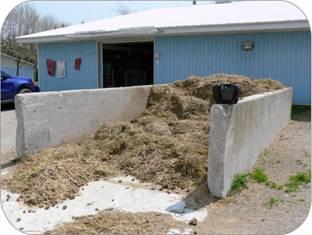
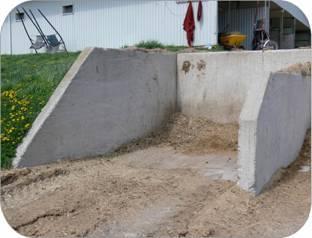
Ideally, a horse barn you are looking at will already have some sort of existing manure storage solution. A cement slap with some sort of three-walled enclosure is typical.

6. Soil Type

We all know that soil types play an important part on horse properties. Yet, taking note of the basic soil type is a detail sometimes missed on the first showing. To get a better idea of what soil is on the property you can often at soil maps that provide information for a municipality. Here is are some examples of maps showing soil types in:

Ideally, you would like a loamy, sandy soil type. Clay is ok but can often be a hazard for pulling shoes in the wet months and creating BIG solid divets in paddocks if horses are turned out during or after a wet day. When the ground freezes these divets can be even more hazardous to your horses. It can also be difficult to regrow grass in these paddocks if they have been overgrazed. 

To get more details about the soil, you can always have it tested.

7. Landscaping

It is easy to get taken in by swaths of unfenced grass areas, tons of trees and pretty flower beds around the barn. But if you don’t want to spend most of your time doing landscaping, you’ll want to consider how you are going to maintain it. Hiring out is an option but can be expensive.  If there is a lot of unused space, perhaps it is an opportunity for extra paddocks, hayfields, or riding rings.

8. Electricity

Good Lighting

This seems like an obvious point but most equestrian property viewings take place during the day. Making it easy to miss checking the lighting in and outside of the barn and indoor arenas. You might not need much lighting during the summer months but when the winter rolls around and daylight is limited, you’ll be grateful for good lighting.

Updated Circuit Breakers

Updated circuit breakers can be paramount to the safety of your horses and your barn. Outdated breaker boxes and wiring can be a fire hazard. This is something that you will likely get into with your inspector during your due diligence stage but it never hurts to have a look at the state of the circuit breaker during your viewing. Again, this is something you will need to take note when viewing older barns more so than newly built ones.

What small details do you always try to take note of when looking at horse properties? Or is there something you love about your barn that you think others should look for? Let us know by sending us a message below!


Why More People Are Making the Move to the Countryside

Why More People Are Making the Move to the Countryside

It’s no secret that the impacts of COVID-19 have been seen in many economic sectors. Real estate is no exception. We don’t want to dwell on this topic for too long. I am sure you are as tired of hearing about it constantly throughout your day as we are.

We don’t want to downplay the negative impacts COVID has had on thousands of people.

But we like to look at the positive wherever we can.

This article briefly covers what we’ve been seeing over the last few months with more and more people looking to make the move to the countryside. COVID might not be the reason but it seems that everything it has caused has become a catalyst for people to buy the house they WANT rather than what they feel they need… more on this below.

A recent article by the Global News (which you can read in full here), covered various stories about this topic. City dwellers looking to move to the country, and some who had already done so. It also had comments from realtors who had seen an increase in interested buyers across various rural areas in Ontario.

Here are some of the driving factors that seem to be causing this change:

Working From Home

The less you have to go into the office, the more options you have with where you live.

If the commute is no longer an issue, you can look at a home further away from the office. Suddenly you have more options. There isn’t as much need, at least for some people, to live right by the highway to cut the commute time as much as possible.

House and Rental Prices


This point follows through from point #1. Let’s be honest, the rental prices are quite high right now. Especially in major cities. Looking for a home outside of the city seems like a reasonable options when you compare it to what you’d be spending on rent every month in a city like Toronto.

Housing prices aren’t much better in the bigger cities either. If you have the option to look at auxiliary towns and cities outside of these areas you immediately get more bang for your buck.

Access to Information


With more access to information online than ever before, moving to the country doesn’t have to be a daunting task. City dwellers who are used to city and suburban houses can get a ton of answers online about what to expect about living in and buying a country home.

For example, the article from Global News cited above interviewed a couple who credited YouTube as an excellent source of information for learning about setting up and running a permaculture farm.

Stay At Home Order Frustration


The stay at home order shed a light on the quality of life for many of those living in the city. It was even tougher for those confined to a condo apartment or small townhome with limited access to the outdoors.

Country Life Doesn’t Equal Seclusion


Here at the Land & Title team say this quite a lot, but country living does not have to mean complete seclusion and there are many country living options to suit your lifestyle.

If you don’t want to go to rural where you’d have a good 15 to 20 minutes drive to the grocery store, you don’t have to. There are a number of locations on the outskirts of town that qualify as country homes which might be better suited to you.

Not only that, but country communities are also very welcoming. They are often closer-knit and can be more friendly than people in the city. Well, that’s our biased opinion anyway. 🙂

Mental Health


It is pretty well known that living in the country is better for your mental health than living in the city. Here is an article that deep dives into that a little more if you are interested. With the added stress of the pandemic and everything else going on currently, more people are looking for a place where they can come home at the end of the day and feel at peace.


If you’re also thinking about making the jump to a country home, now is the time to do it. This trend of more buyers looking to move to the countryside is only going to put more pressure on the market and keep driving prices upwards. This is something many of us are seeing across the board with residential real estate.

What Does It Cost to Build an Equestrian Facility?

What Does It Cost to Build an Equestrian Facility?

In this article, we are going to cover some of the basic costs that go into build a barn, indoor arena, outdoor arena, fencing and even footing. This is a great place to start for anyone looking to build an equestrian facility! And because we cover all facets of such a project, those of you who only want a barn, for example, should find this useful as well.

This is quite a long article, so feel free to use the links below to jump to the section you are interested in:

If you’ve been involved with horses for some time, it would only be natural to have thought about owning a horse property, and there are a few ways one can do this. You can:

  1. Purchase a turn-key facility.
  2. Purchase an existing facility that needs renovating. It might be cheaper to acquire than #1 but renovations can get very costly, very quickly.
  3. Buying vacant land, or a property with an existing residence, and building a barn/facility.
  4. Building the facility on a property you already own.

Some people simply want a small barn and some paddocks with run-in shed to make up their facility. Others require a state of the art training operation. And there are many variations in between.

Our dream has always been to purchase a piece of property with an existing residence and build both a barn and outdoor arena with good all-weather footing to use in the warmer months. We’d then board our horses during the winter. The right property for us hasn’t come up yet but there are all sorts of variations to making up your dream horse farm. 

PLEASE NOTE: the costs presented here are only ESTIMATES. There are so many variables that go into such a project and it is impossible to get an accurate cost of everything with knowing exactly what your property is like and knowing exactly what you want. Costs are in Canadian Dollars unless otherwise stated.

Let’s begin with building the barn…

The Barn

The cost of building a barn is going to depend on a number of things, some of which include:

  1. Size. The wider you want to go the more expensive it is going to be.
  2. Labour costs in your area.
  3. Material costs in your area as well as the type of materials you choose to use (e.g. steel vs. wood).
  4. Whether you “Self Build” and manage the site or use a Contractor.
  5. Style of the barn
  6. Whether or not you require a zoning variance to build the barn (this can get very costly).
  7. Building Permit Costs

Your options for building a barn typically include a barn kit or prefabricated barn, using a barn builder/contractor or going completely custom using architects to draw up your ideas and then using a builder/contractor to build them.

On average, you should expect to pay anywhere from $30 – $80 per square foot for a barn, sometimes more depending on how fancy you want to get.

Here is a break down of some of the costs…

1. Barn Kit / Prefabricated Option

DC Strcutures - Barn

Image Credit: DC Structures. Columbia 72′ Barn Kit w/ customizations

We’ll use DC Structures as an example. They build extraordinary barns and offers beautiful barn kits.  Although started in the US, they do service Canada as well. We highly recommend checking out some of their projects!

Their kits range from US $38,485 to $200,000 (~$52,000 – $271,000 CAD). Or an average of CAD $33.90 per square foot. They offer a variety of style options, each of which come with upgrade and customisation options.

These kits typically offer the choice for adding in an upstairs apartment as well, which is ideal for those that need accommodations for barn staff.

However, these are smaller barns and likely won’t work for those needing a large facility. But they could be work for those of you who want a cost-effective way to keep your horses at home.

You can also explore BarnPros and HorizonStructures for other barn kits / prefabricated options. For their prices, you will need to get in contact with them directly. 

The barn kit costs, and generally all prefab builds don’t include shipping, land preparation, pouring of a foundation and often times roofing is excluded as well.

Most barn kits and prefab. projects are either self-managed (to keep the costs down) or a local contractor can be hired to help you.

2. Using a Barn Builder

From what we have seen, about $30 – $45 per square foot is what you can expect to pay to build a pole barn.

A timber frame, post and beam barn can run you about $50-$100 per square foot.

For a steel barn, you are looking at an average of $25 – $40 per square foot.

This again varies depending on the finishes you want, your customisations, what company you go with, and all of the other variables we listed earlier.

3. Going Completely Custom

Well, we can’t exactly give you a cost estimate to build a custom barn but expect it to cost quite a lot. Of course, this is going to depending on what materials you use, how high-end you go with finished and customizations, etc. When you go to a barn builder or contractor, oftentimes they have basic “outlines” of projects that you can choose from.

When you go custom, just by virtue of needing to hire an architect to draw up your plans and have a builder start from scratch on your project, you’ll likely be spending more than the other two options above. 

Miscellaneous and Additional Barn Costs

Building Permit costs:
These costs are often different from one municipality to the next. To get an accurate cost you should call your municipality or visit their website. Typically, you can use the below formula to get an idea of permit costs:

Permit fee = SI x A

  • SI = Service Index for classification of proposed work (see municipality for this amount, it can vary depending on what you are building).
    As an example, It costs $2.91/m2 in Hamilton for farm buildings.
  • A = Floor Area (in m2) of work involved.

Site Preparation:
$1,200 to $5,000. Possibly more. This depends entirely on how much clearing, leveling and excavating need to be done. If you need to demolish any existing building that will add to the cost as well. The cost will also be different if you do some of the site prep yourself vs. If you hire someone to do it for you.

Roofing:
$5,000 and $24,000. Naturally, this depends on the size, style, and roofing materials you choose for your roof.

Insulation:
$900 and $1,900. Again, it depends on how much you need to be done. If you have an accessory apartment above the barn it may cost more to insulate that the estimated prices here.

Plumbing and Electrician Labour:
$50-$150 per hour. Again, this may vary depending on your area and the company you work with.

Painting:
$400 and $2,000. But again, this is going to be dictated primarily by the size of the area that needs to be painted.

Barn Flooring:

  1. Concrete:  $5-$10 per square foot. You can get the concrete floor brushed or textures to provide a little more traction.
  2. Interlocking brick: $8 – $15 per square foot.
  3. Wood Flooring: $8-$12 per square foot
  4. Laminate Flooring (for areas like viewing and locker rooms): $6-$8 per square foot
  5. Interlocking Pavers: We have seen as low as $3.50 – $8.50 per square foot ($4.75 – $11.53 CAD) Former from EVOPAVE, Latter for TRU-STEP Pavers. We have also seen other companies quote up to $32 ($43 CAD) for rubber pavers as well. Best to shop around.
  6. Rubber Matting in Stalls: $3.50 per sq ft. You are looking at around $500 for a 12×12 stall. But sometimes companies decrease their pricing per mat depending on how many you are ordering like this company here.
  7. Stall Mattress: Over CAD $800 for a 10×10 stall from StableComfort. This is for their basic mattress. So if my math is correct you are looking at about $8 per square foot for this size of the stall.
  8. Polylast Flooring: Depending on who you go to, you are looking at about $10 – $16 per square foot. They are great for wash stalls! You can get your personal quote from Polylast Systems.


The Indoor Arena

Size will matter here (both in length, width, and height) as will the materials you choose for your indoor arena and how high end you go in terms of finishes, lighting, doors, windows, and so on.

The costs can also vary greatly depending on how much land preparation needs to be done in order for the arena to be built.

Going through multiple resources and receiving quotes from different builders, we have seen an average of: $15 to $30 per square foot to build your indoor arena. As with everything horse related though, the costs can easily go higher than this. It would be wise to budget for around CAD $150,000-$300,000 for the average-sized arena at 80’ x 200’.

If you decide to go with a coverall arena we have seen an average of $120,000 – $160,000 installed.

The great news is, you can also get an ‘arena kit’ or prefabricated arena to go along with your horse barn kit! The bad news is, with prefab. you are often restricted by size.

From DC Structures, their maximum-sized arena kit is 90×120. HOWEVER, they can make modifications for you to get a larger arena but of course, this will cost more. Their pre-made size options range from 60×120 to 90×120 and are priced accordingly at $127,000 – $173,000 (~ CAD$172,000 to $230,00).

The Outdoor Arena

Again, this is going to depend greatly on the site, how much leveling needs to be done. How many rocks need to be removed or even blasted through. The soil type on your land will also be a factor in pricing. Fencing and if required, Lighting will also be a factor that impacts the total price for your outdoor arena.

Sand Arena - Footing

You’ll probably be looking at about $25,000-50,000 for a 100 x 200 outdoor sand arena.

When building an outdoor arena there are two extremely important elements. One is the leveling of the ground. No matter how flat your land seems, it likely isn’t as flat as you think. The second is the drainage. Installing a good drainage system might be costly at the beginning but you will be happy you made the investment when you don’t have massive puddles in your arena after a rainstorm. 

The Footing

We cannot talk about footing with at least mentioning the base below your footing. It is a very important component!

As Alex von Hauff with Strathcona Ventures said in an interview with Horse Journals: “You can spend a million dollars on the base and $5,000 on sand and you’ll be happy. If you spend $5,000 on the base and a million on sand, you’ll always be unhappy. Spend most of your money on your base and drainage.”

We agree with this statement but still think footing is essential for the soundness and comfort of your horse.

Horse Footing Cost

From what we’ve found, your base install is likely going to be around $1.50-$3 per sq ft.

As for the footing:

Regular Sand:
You should be able to have this trucked in $15 and $40 per cubic yard.

Rubber:
Min. Order at 2000 lbs is about $0.19/lb

GGT Footing:
This is the same footing that was recently put in at Angelstone. You’ll require approximately 10,000-140000 lbs for an 80 x 200 arena. According to the GGT footing website, you’ll be looking at a price of USD$10,900 – $15,260 (~CAD $14,700-$26,000) just for the footing.

Synthetic Footing:
The creme de la creme of footing is Travel Lite or TravelRight (offered by Footing First). You can expect to pay close to $100,000 for a 100 x 200 arena. ($5 per sq ft). However, there are other options offered by Footing First that ranged from $1.50-$5 per sq.ft.

There are a variety of options out there as far as footing goes. Most footing companies offer a free consultation. So whether you are starting from scratch or want to upgrade your footing, you should contact an expert to get an idea of what the footing is going to cost you.

And again, do not forget to factor in the cost of adding a good base!

The Fencing

Fencing is a necessary component on every horse farm.

1 acres = ~ 800 linear feet

Please note: ALL COST AND FENCE TYPES CAN BE VIEWED ON SYSTEM EQUINE’S WEBSITE HERE. The below have been taken from their website as estimates:

  1. Posts: $6.50 – $30 per post
  2. Wood: $15.99 per 16’
  3. Wire Mesh: $800 – $950 depending on height per 165 feet
  4. Flexible: $635 – $735 per 660 feet
  5. Electric Braid: $155 per 660’ / $285 per 1320’

If you are installing the fence yourself there will be other bits and bobs you’ll need to like insulator ends for electric braid fencing, brackets, tensioners, and so on, all at an extra cost.

System Equine is the best company for fencing in Ontario. We recommend consulting with them for your fencing needs.

If you are handy and able to install the fencing on your own, then it might be worth exploring local hardware stores as they carry wood posts and rails, as well as some flexible fencing options as well.

horses by fence

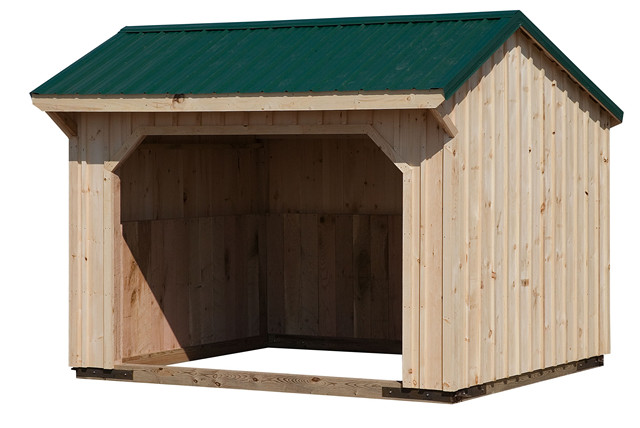
RUN-IN SHEDS

We have looked at a number of companies and Brubachers seems to be the most cost-effective. They quote $2,000 to $3700 depending on the size you want.

North Country Sheds is another good company but a quote must to requested from them directly.

The above prices do not include the cost of shipping as of course, that would be location dependant.

Run-In Shed NorthCountrySheds

Image Credit: North Country Sheds

Being able to get multiple quotes directly from companies and contractors is going to be your best bet for accurately costing out a project like this.

If you’ve ever gone to a tack shop, selected like 3 items and had your bill somehow come to $479.89… that’s what it seems like to build a horse farm. There are often unexpected costs that come up and costs add up quickly!

In reality, for a higher-end facility, with good footing and a barn with over 20 stalls, you should expect to pay over $1,000,000 easily. This might be fine if you already own the property but purchasing even vacant land these days is not cheap. Naturally, a small private facility won’t cost this much, and if you just want a barn, it will cost even less. It all depends on what you need.

For reference, at the end of 2019, the average sold price for a horse farm in the Greater Golden Horseshoe area was just over $1,200,000.  The majority sold were smaller properties and hobby farms with an equestrian component. A good majority of the listings priced above this are still currently listed or were taken off of the market.

As of writing this article, the average price is around: $3,200,000. If you’re looking for a turn-key facility you should expect to pay anywhere from $2.5 – $3.5 million these days.

As mentioned earlier, another way to go about buying a horse property might be to buy one that needs updates and costing those out instead of buying a turn-key operation.

We can set you up on an equestrian real estate market watch so you can keep up to date with horse farm prices based on your criteria HERE.

For a list of trusted builders, footing companies, and other experts please contacts us directly here.

Understanding Conservation Easements in Ontario

Understanding Conservation Easements in Ontario

Rural homes are often sought after for their natural beauty. Be it forested areas, picturesque streams or acres of untouched land, people want to live in the countryside to enjoy nature. Conservations easements (along with other environmental protection protocols) aim to protect this natural beauty.

When looking at country or rural homes you may come across a property that has a registered conservation easement on the land. Understanding what conservation easements are and how they work is important as they can have an impact on what you are or aren’t allowed to do with that property.

Below we answer some of the basic questions around conservation easements and offer up some advice for buying a property with one.


What is a Conservation Easement?

In short, this is a legal agreement between a landowner and an organization (such as a land trust, conservation organization, government agency, or local municipality).

The agreement aims to protect a portion of or the entire property by way of restricting what the land can be used for. Therefore putting rules into place about what future owners can/cannot do with the land. The protections laid out in the agreement are monitored and protected by the organization with which the easement has been registered, in perpetuity.

Under this agreement, the landowner can continue to use the land, sell it, gift it or pass it down to family.

To be clear, the landowner continues to own the rights to the property. Unless he/she decides to donate the entire property to a land trust which would be giving ownership to the land trust.

Conservation easement agreements can be tailored to the owner specifications as long as it aims to preserve the land. 

This easement, like others, will be registered on the property title.

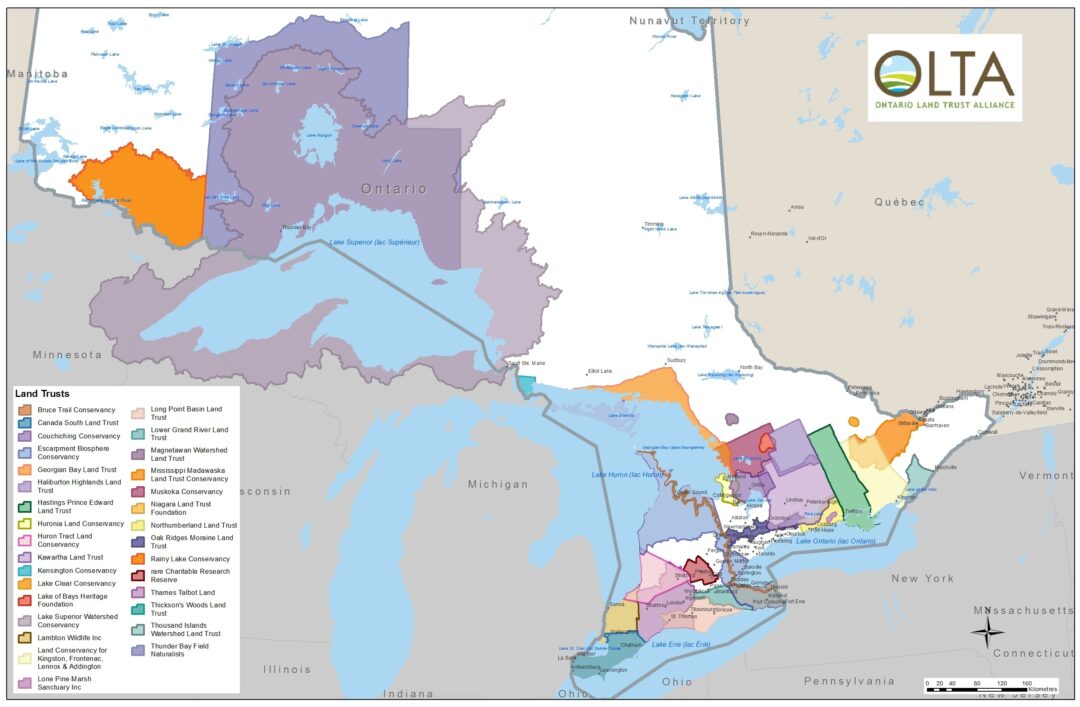
Land Trust Alliance - Ontario

What do Conservation Easements Protect?

Conservation easements can be used to protect the following:

What Are Some Examples of Conservation Easements Restrictions?

Any restrictions or prohibitions will be laid out in the conservation easement agreement. Some examples include:

Restricting the cutting down of trees. For example, the restriction might be put in place to prevent any logging or forestry activities but still allow the owner the cut down some trees for limited personal use (like firewood).

Prohibiting any hunting of wildlife or fishing on the property.

Prohibiting any land development, be it residential, commercial, or industrial. 

Prohibiting any extraction of archeological resources like sand, rock, gravel and other aggregates from the land.

Prohibiting any alternation of watercourses.

Are There Any Tax Benefits to Registering a Conservation Easement?

The short answer is yes, there can be.

By either registering a conservation easement or purchasing a property with an existing one, you may be able to benefit from either income tax deductions or reduced property taxes.

However, there are many requirements that must be met in order to qualify. 

There are a lot of nuances that go into qualifying for these programs.  It would be imperative that you speak with a tax accountant versed in such programs to get the best advice.

As a place to start, you can explore the tax benefit program resources below:

  1. The Federal Ecological Gift Program. 
  2. Conservation Land Tax Incentive Program.


Can a Conservation Easement Be Altered?

There is no simple “yes” or “no” answer to this, unfortunately.

We would say that most of the time the answer is No.

However, it depends on a few things:

  • The property and what is being protected
  • What exactly is stipulated in the conservation easement agreement
  • What you want to alter and by how much
  • Possibly which organization the conservation easement is registered with

For example, if you wanted to make an alteration to a home registered with the Ontario Heritage Trust in such a way as to maintain the integrity of the build you would likely have the support of this.

You would need to start by asking for permission from the conservation organization or trust with which the easement is registered and go from there.


How Do I Know if the Property I Am Buying Has a Registered Conservation Easement?

During your due diligence process, you can do a few things to find out if the property of interest has a registered conservation easement on it.

  1. Your real estate agent can ask the listing agent as the seller should know (but may not).
  2. Your agent or you can check with the local municipality.
  3. Have your lawyer pull the title of the property and see if there are any registered easements. This is going to be the best and most accurate option.


Can Zoning and Permitted Uses Have an Impact on the Conservation Easement?

Another “no simple answer” answer. In some situations, yes and in others, no. As is most often the case, it depends on the scenario. We’ll give you two example scenarios:

  1. A vacant land property has zoning that does not permit the building of any kind on that property. An owner cannot register a conservation easement that allows for the building of a home on that property.


  2. A vacant land property has zoning that allows for the building of a single-family residence. A registered conservation easement on this property does not allow for the building of any kind on the land. Even though the zoning allows it, the conservation easement takes precedent here and one could not build a home on the property.

Another important note is that even if zoning were to change, the conservation easement will still persist as they are registered on title and run with the land (not with ownership). For instance, if the zoning change on agricultural land allowed the building of a subdivision by the municipality but a registered conservation easement protection did not allow this, no subdivision could be built on the land.


Advice for Buying a Property With a Conservation Easement

Conservation easements are excellent tools that help with protecting green spaces and land in general.  But they can also be restrictive when it comes to building or making other property alterations.

Be aware of the restrictions upfront so that you can make an informed decision on whether the property is for you or not. If you decide to go ahead with a purchase, know as much as you can about the easement so you don’t run into any surprises in the future. 

If there is an easement on the land, you will also want to explore information on the organisation with which the conservation easement is registered. They may want to monitor the property from time to time and it is good to make sure your goals, plans, and ideas line up with that of the conservation authority or trust.

It is also worth noting that should you one day want to sell your property, the conservation easement may be of some concern to potential buyers. This likely won’t be a huge issue as many people wanting to buy a rural property appreciate the land protection but again it depends on the property and the restrictions involved.

Speak with a lawyer. It is so important to seek legal advice from a qualified professional on these matters. 

If you are interested in Ontario Land Trusts, you can find a list of all registered Trusts here

Did we miss anything on conservation easements? Do you have other questions or concerns? If so, get in touch and we’d be happy to help!