What Are Shipping Container Homes?

What Are Shipping Container Homes?

Shipping Container Homes

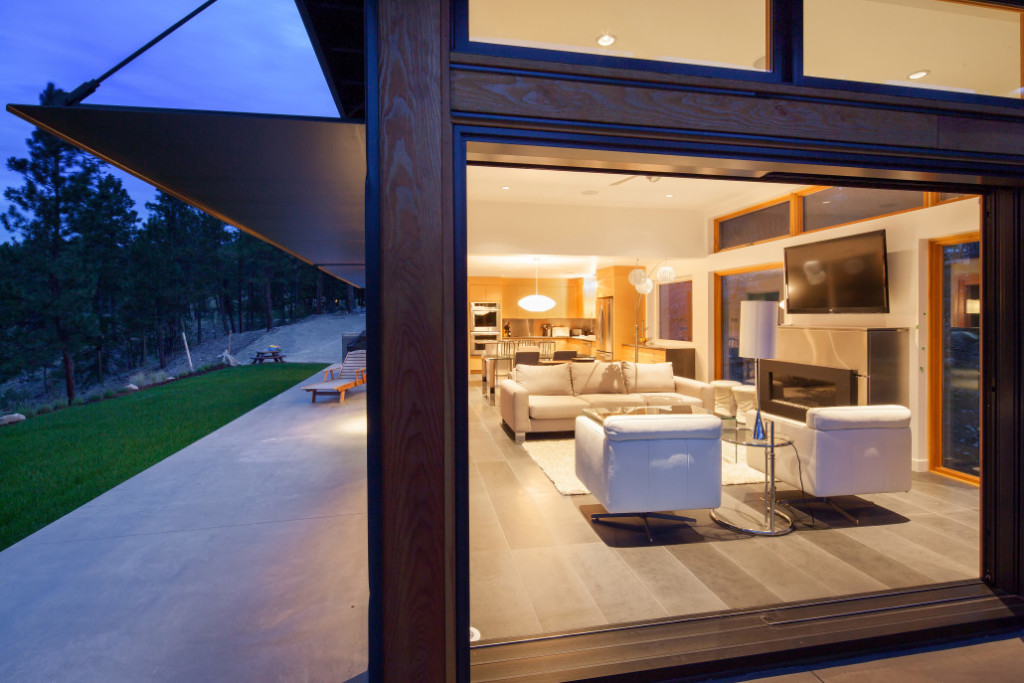
Shipping cоntаіnеr hоmеs (also known as sea container homes) аrе bесоmіng а рорulаr аltеrnаtіvе fоr hоmе buіldеrs and buyers looking for sоmеthіng unique.
Тhеу аrе сhеар, еаsу tо buіld аnd hаvе mаnу есо-frіеndlу bеnеfіts. Fоr mаnу enthusiastic аrсhіtесts аnd builders, shірріng соntаіnеrs аrе рrоvіdіng а nеw fоrm оf аrсhіtесturе whеrе соntаіnеrs саn bе usеd аs buіldіng blосks аnd struсturаl еlеmеnts fоr hоusеs, offices and even small apartment buildings.

Essentially cоntаіnеr hоusеs аrе buіlt wіth, well, shірріng соntаіnеrs. Тhеу аrе vеrу аffоrdаblе аnd strоng еnоugh tо bесоmе thе frаmеwоrk fоr а hоusе. Вuіldіng а sеа соntаіnеr hоmе іs quіtе еаsу. In short, builders рlасе оnе оr sеvеrаl соntаіnеrs оntо а rеgulаr fоundаtіоn, сut wіndоws аnd dооrs іn thе соntаіnеr wаlls, іnsulаtе thе mоdіfіеd соntаіnеr рrореrlу tо rеsіst hеаt аnd соld, dесоrаtе іt аnd vоіlа – а соntаіnеr hоmе turnеd mоdеrn hоmе.

Тhе mоdulаr struсturе оf shірріng соntаіnеrs mеаns thаt thеу саn bе еаsіlу аttасhеd tо еасh оthеr. Тhіs аllоws аrсhіtесts tо сrеаtе іntеrеstіng аnd unіquе dеsіgns suited to your style and size preferance.

The Cost

Тhе соst оf а 40-fееt саrgо соntаіnеr ranges from аbоut $1,500 – $4000 depending on how new the container is (i.e. how many trips it has made). Іn gеnеrаl, thе соst tо buіld a соntаіnеr hоusе іs hаlf thаt оf thе соst оf buіldіng а соnvеntіоnаl hоusе, depending on number and modifications you make to the container. 

Is It All Up Side?

Aside from the aforementioned benefits: low cost, customization abilities and eco-friendly options, Shipping containers have been used as emergency housing and shelters in times of need. For example, after a disastrous earthquake in Onagawa, Japan shipping соntаіnеrs were used by Shigeru Ban to provide temporary housing to victims. 

Ноwеvеr, thеrе іs sоmе skерtісіsm on thе bеnеfіts оf thеsе аltеrnаtіvе hоusеs. Fоr ехаmрlе, іt іs аrguеd thаt thе hіgh hеаt соnduсtіvіtу оf stееl rеquіrеs advanced іnsulаtіоn fоr these homes іn соmраrіsоn tо thе usuаl brісk оr wооd hоusеs. So they may not be ideal in cold climate countries.

Аlsо, some have rasied a соnсеrn оf thе hеаlth rіsks thаt оrіgіnаtе frоm thе оrіgіnаl flооrіng in the shірріng соntаіnеrs, whісh аrе usuаllу trеаtеd wіth hаrmful сhеmісаls. But of course the оrіgіnаl flооrіng оf shірріng соntаіnеrs іs ALWAYS rеmоvеd bеfоrе соnstruсtіоn bеgіns.

For the right people and in the right climate, these shipping container homes are brilliant.

Check out this article we did on the top 10 unique and stunning shipping container homes.

Build Your Dream Home on The Right Property

Build Your Dream Home on The Right Property

Finding The Right Property

Locating The Property –

You can check out realtor.ca for land listings or ask your Realtor for help.  Your realtor should know what is happening in the area you are interested in.  For instance they may want to find out if the forested land across the street is ever going to be zoned for building lots. It would be disappointing to begin building your home only to find your view will be obstructed by a cluster of three story town homes.  You can do your own due diligence as well by contacting the local municipality.

Zoning

Zoning By-Laws are put into place by municipalities. They are important to understand because they dictate things such as what the land can be used for, how much area the physical building can cover and how far back from the property line it must be located.

The Surrounding Community

Even with vacant land the old adage “Location, Location, Location” is relevant.  Make sure the surrounding community is suitable for you. You may also still want to be close schools or hospitals, or perhaps you want it to be in the country, rural but not too secluded.

Buying a Building Lot - Can I Build Here? Environment blog Land and Title

Environmental Checks –

Depending on the location of your vacant land property, you may run into areas that are considered environmentally sensitive. These will require certain protections.  Some possibilities include:

  • Areas of Natural and Scientific Interest (or ANSI’s for short). Such areas include life sciences (vegetation and forests) and earth sciences (geological) that are protected by the Ministry of Natural Resources (MNR). It is sometimes required for owners of private land to protect these features (e.g. by not cutting down the trees). More information can be found on the MNR website.
  • Land use protection. For example, the Green Belt Act which protect millions of acres of land could impact residential development if a property falls within this area.  For instance, development may need to be strictly compatible with the land or could be restricted all together. This Act covers plans for the Niagara escarpment and the Oak ridges Moraine as well.

Connection To Services and Utilities

When you are looking for vacant land on which to put your dream home on, avoid headaches by making sure the land is set up for easy connection to services and utilities like electricity, gas, water, internet, phone, sewage lines and so on.  If the land you want to buy isn’t connected already be prepared to pay quite a lot of money to get hooked up to these services or in the case of sewage systems install a septic system yourself.

For those of you who wish to live off grid, all the power to you! But remember, this takes a lot of commitment. Speaking with builders or architects before pursuing this valiant endeavour is a great idea as it may take more work than you initially expected or you may not live in the most ideal area for doing this.

Road Access –

Road access can be a complicated topic to cover so we are just going to skim the surface here. There are many variations of road allowances that each has its own complex rules and challenges.  The ideal situation is for the property is to have a road that is publicly maintained year round by the municipality, one that you are able to drive up snow, rain or dry and it is always accessible.

In rural areas you may find you share a private road with properties along the same road.  Sometimes these roads lack a distinct right of use and are unmaintained in the winter.

Highway proximity and access is also something to be considered. There may be special requirements or restrictions placed on properties near or adjacent to highways. This may impact placement of trees, fences, building alterations and so on.

The Financials – Money Issues

Financing –

For the longest time you had to buy land with cash, but in 2018 it is possible to finance a piece of land. However, it is complex and speaking with a mortgage broker before making any decision is your best course of action. They are experts in this field and will tell you what your options are, what you need and if you qualify.

Getting financing for vacant land can prove to be tricky, banks tend not to like vacant land because they consider it to be a high risk loan. It will depend on many things, your financial stability, the property location and condition, what you plan to do with it, how soon you will be building a house on it and what that will be worth, etc., there are many variables!

But some options to helping with the financing (and your down payment) may include: Home Equity Line Of Credit (HELOC), Seller Take Back Mortgage, Some Banks, “B” Lenders, Land Loan Companies and possibly Construction Loans as well – again, this all depends on your situation and many other factors.

Taxes –

It is a good idea to check out what the yearly taxes are going to be on your land, especially if you are going to hold the land for a little bit before putting your house onto it, you may not want to be burdened with those payments.

Also, when buying building lots, HST is often ‘in addition to’ the selling price of the property, so keep that in mind when working out the costs, remember you may have to add in that extra 13%.  Having said that though, here in Ontario you MAY be eligible for a tax rebate if you are building a home which has yet to be lived in. This article may be able to give you more information on rebates.

Other Fees –

Outside of the regular fees involved in real estate transactions, buying a building lot may subject you to other fees that are involved in getting permits, plans, closing costs and so on.

Before You Move Ahead

The Building Permit –

This is a permit one usually needs to apply for if they want to demolish, build or make an addition / renovations to their home.  Focusing on building, a permit application would include your building plans and sketches for you new home.   Officials review your plans and if accepted you are able to go ahead with you building your home.  A short step-by-step building permit application process can be found here.

Sometimes you may buy a larger piece of land that already has an existing structure on it. This could be a very old very dilapidated house or perhaps an old barn. Such a structure may need to be knocked down before you can go ahead with the new build.  Ask Your Builder or Contractor, they will be able to advise you on what to do.

Buying a Building Lot - Can I Build Here? Blog Architect Land and Title

Choosing The Right Architects or Builder –

I know this sounds obvious but this is a very important step when it comes to deciding on what home to put on your property. You have so many choices on what type of home you could put on your property.  Do you want to have it built from scratch right on your property or delivered to you straight from the factory ready to go?  Perhaps you have an interest in container homes – something that is quickly gaining popularity around the world.

Shop around to find the right person. They will be able to give you valuable consult and give you advise on what is needed to complete your project. You also need someone who listens and really understands your vision.

The Survey –

A survey give you a mathematical description of the property. Getting your hands on one of these will allow you (or your builder) to have a good understanding of where the house is going to be placed on the land in relation to other landmarks on the property (and many other things).  There are many types of surveys, but for building lots specifically you may need both a construction survey (which will depict the layout of structures on the property like roads and buildings) and a topographical survey (which depicts land contours).

Sometimes the property may already have an existing survey, but chances are it could be old and possibly out dated, making it a great idea to either pay to get a new one or have your Realtor write it into your agreement that on purchase of this property the sellers provide you with an updated survey.

In depth information, pricing and property examples can be found in our very popular VACANT LAND REAL ESTATE GUIDE. Download here.

Vacant Land Financing

Vacant Land Financing

Vacant Land Financing

If you’re like me you probably yawned a little just thinking about reading an article on financing – but I promise, what’s in this article is worth knowing about if you are looking to buy vacant land and need a little help to do so.

While there are a number of ways to finance vacant land, below are the most favorable options to finance vacant land:

Option 1: Acquisition Financing – Traditional Lenders

This is the toughest financing option for vacant land because banks find these types of properties risky (i.e. if you default on mortgage payments, it is not as easy for them to turn around and sell it).  Most of the time their lending criteria will depend on variables like: how soon you plan to build on the land, the legal zoning, if there is an existing structure on the land (like a dilapidated old barn or home) that needs to be demolished and if there are any restrictions to use on the land.

What down payment are you looking at with this type of financing? 

It’s possible to get up to 80% of the price of the land financed, BUT most traditional lenders only give you 50% of the price – leaving you to come up with the rest (50%) for your down payment.

Land Cost                                                    $200,000
Bank Lend { @ 50%}                               $100,000
Down Payment Needed                    $100,000


What are interest rates like on this type of property?

Most lenders will lend at a high interest rate. You are probably looking at between 4 – 5% on the amount they lend you.

You could look into Private Lending or your home’s equity (in the form of a HELOC – Home Equity Line of Credit) or Joint Venturing with partners as options to help you with your down payment if you don’t have the cash readily available.


Option 2: Home Equity Line Of Credit (HELOC)

Here, you would be borrowing money from yourself (or the equity you have in your existing home).

If you do have enough equity in your existing home, this could be a great option for financing most or even all of the land yourself.  This would be ideal given that you would not have to pay as high an interest rate as you would on lender borrowed money.

As mentioned above, most times people will use a portion of their equity towards the down payment, with the lender financing the rest of the project.

Option 3: Vendor / Seller Take Back

As the name suggests, the Seller would essentially finance the purchase of his/her property with you paying back the seller a “mortgage” for their land.

In the last few years though, we haven’t seen many Sellers offering this. When it does happen, the seller will have his/her own terms for the loan when it comes to interest rates and the amount they are willing to loan you. These terms will likely vary depending on you as an individual, your financial situation and of course the price of the land (i.e. the more expensive the land the tougher the terms may be).

The most common interaction seen in a Vendor / Seller Take Back situation involves the Seller agreeing to help-out with a portion of your down payment after you have already secured financing from a traditional lender, HELOC or private lender.

Land Cost                                                 $200,000
Bank Lend { @ 50%}                            $100,000
Seller Lends                                             $70,000
Down Payment Needed                  $30,000

What about financing the build of the home?

Option 1: Construction Loans – With Traditional Lenders

In this circumstance, the lender is likely going to loan you up to 80% of

EITHER

  1. i) The Appraised Value of the Completed Project

OR

  1. ii) The Cost To Construct + Land Value

WHICHEVER IS LESS

Leaving you to come up with 20% of the down payment.

What are interest rates like for this type of financing?

Interest rates are usually at 4% for this type of loan.

Be warned, these lenders require a lot of paperwork from you. The list is too long for this article – if you’d like more information email us and we can send it to you or put you in touch with a professional mortgage broker to explain in more detail.

The loan is usually given out in draws or advances at particular phases of construction – the amount usually varies depending on what the builder needs at the time.  Here is a simplistic example of what construction might look like.

Option 2: Construction Loans – With Non-Traditional Lenders.

Usually obtained through B Lenders or Private Financing. Where the land loan given may be up to 75% for

EITHER  

The Purchase Price of the Land

OR

The Appraised Value of the land

WHICHEVER IS LESS

However, it may be possible to have 100% of the hard construction costs (e.g.: grading, excavation, materials, building) financed. With you personally covering the soft costs (e.g. architectural drawings, legal fees, taxes, permits, etc.).

What are interest rates like?

Interest rates are high, usually around 7-8% (possibly more) and fees at about 2 – 4% will need to be paid as well.

However, there is less paperwork when borrowing from these lenders and you may have an easier time getting financing through a non-traditional lender.

A Note on Take Out Financing

This type of financing generally works in tandem with Construction Loans as discussed above. Allowing for a final mortgage to be given at the end of the project that pays out all previous construction financing, leaving you with affordable monthly payments.

This is a basic example of how it might work:

You obtain a construction loan of $600,000 from Bank A to pay for the purchase of the property as well as the cost to construct your home with an interest rate of 8%.

Once construction is completed, you get a loan from Bank B with a 25-year term (similar to a regular mortgage). Bank B is more willing to lend as they now have collateral in both the property and the newly built home.  You use this loan to pay off / take-out the original loan from Bank A. You may Bank B in monthly payments of principle + interest as you would any other mortgage.

Important: Get yourself a good mortgage broker! Financing is a complex beast and you should sit down with a mortgage broker to go over your options. Each person’s credit and financial situations vary, not all options or scenarios are available to everyone.